Skipway Increases Hard Plastics Payloads to 26 Tonnes per Container with New Baler
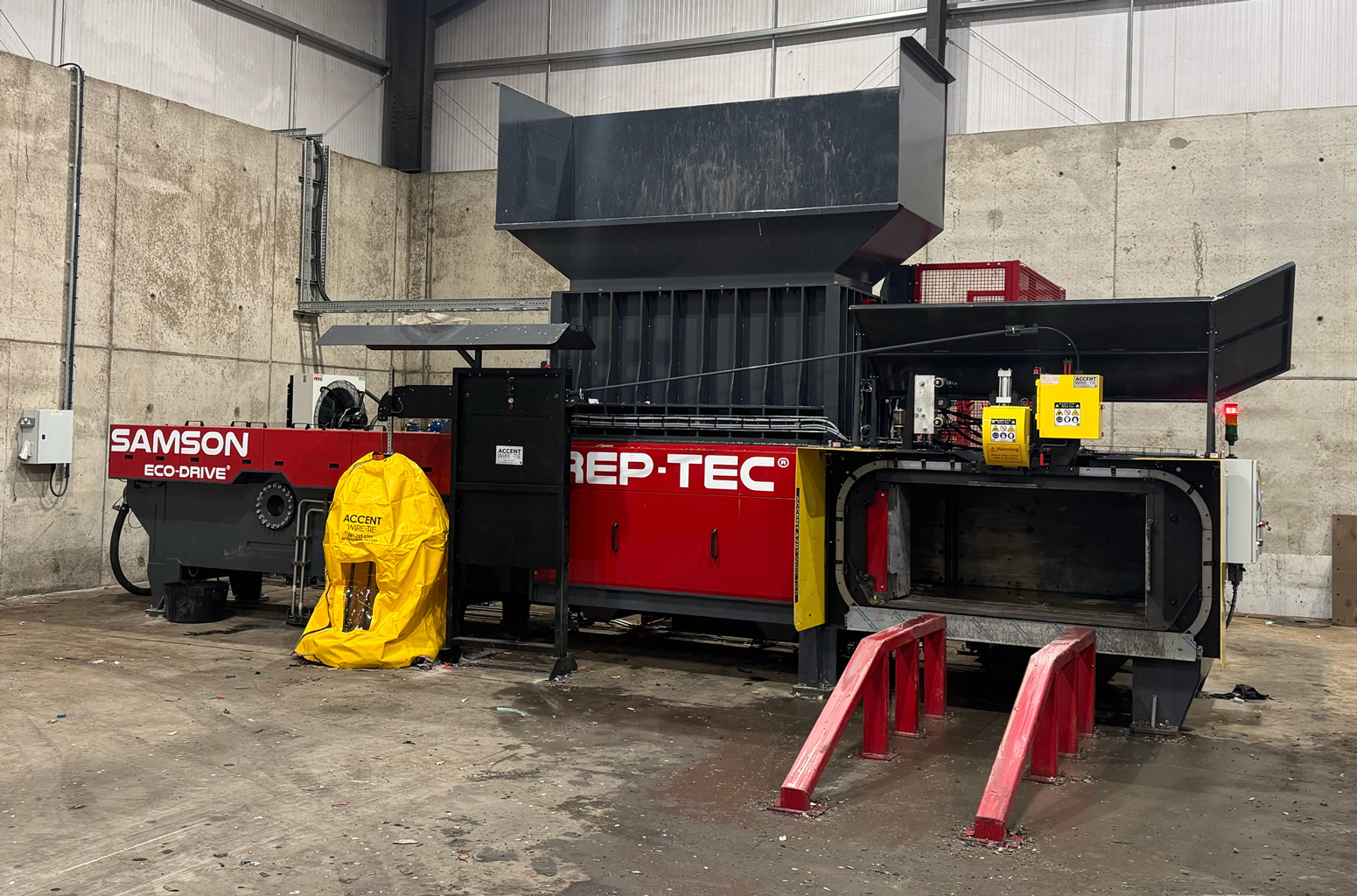
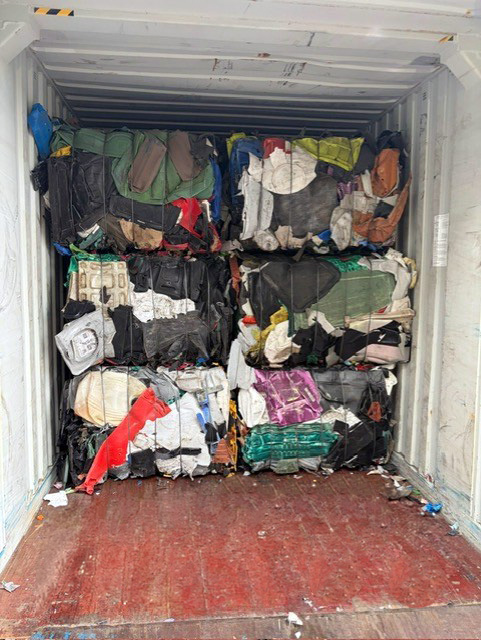
Skipway has significantly improved its plastics recycling operation with a new REP-TEC SAMSON twin ram baler, increasing container payloads from 18 tonnes to an impressive 24–26 tonnes.
Alongside producing denser, more consistent bales, the new machine is helping Skipway load containers faster, improve forklift handling and reduce transport costs.
CUSTOMER
Skipway Skip Hire
LOCATION
N. Ireland
PRODUCT
Mixed Hard Plastics
MACHINE
Samson Twin Ram Baler
The Customer
Skipway provides waste management and recycling services, processing a range of materials for recovery and onward recycling. As part of its continued investment in efficient recycling operations, the company required a baling solution capable of delivering high-density, consistent bales across demanding rigid plastic applications.
The Challenge - Increasing Payloads Without Compromising Handling
Skipway processes mixed hard plastics, preparing material for export in 40ft shipping containers.
Previously, the company relied on a semi-automatic baler, which was labour-intensive and produced container loads of just 10–12 tonnes.
To improve efficiency, Skipway invested in a refurbished REP-TEC twin ram baler. This increased container payloads to approximately 18 tonnes and significantly improved bale quality.
However, the larger bales created new challenges. Their dimensions made them difficult to handle with forklifts and presented problems when loading and unloading containers.
Skipway needed a solution that would deliver greater bale density while making handling and transport easier.
The Results at a Glance
24-26 tonnes per container
Increased from 18 tonnes with the previous baler
Improved bale density and consistency
Machine adjustments tailored to Skipway's operational requirements
Faster, easier loading
Improved bale dimensions make forklift handling more efficient
Reduced Transport Costs
Greater payloads mean fewer containers are required to move the same volume of material
Responsive Support
Machine adjustments tailored to Skipway's operational requirements
The Solution: A SAMSON Twin Ram Baler Tailored to Skipway
Building on its existing relationship with REP-TEC, Skipway invested in a new fully automatic SAMSON twin ram baler.
Designed to handle challenging materials such as mixed hard plastics, the SAMSON produces dense, consistent bales suitable for deep-sea shipping.
But achieving maximum density was only part of the solution. Getting the bale dimensions right was equally important. When the initial bales proved slightly too large, REP-TEC remotely adjusted the machine settings, reducing the bale width by just 20mm.
That small adjustment made a big difference.
The new bale dimensions allow Skipway's forklift operators to handle the bales more easily and load containers considerably faster.
With REP-TEC based locally, Skipway also benefits from responsive technical support and a team that understands its operation.
The Results: More Material in Every Container
Since installing the new twin ram baler, Skipway is now achieving container payloads of 24–26 tonnes of mixed hard plastics.
This represents an increase of up to eight tonnes compared with its previous refurbished twin ram baler.
The benefits extend beyond increased bale density.
Maximised Container Payloads
Faster Loading and Easier Handling
Reduced Transport Costs
Reliable Support
A Partnership Built on Practical Support
Having previously supplied Skipway with a refurbished twin ram baler, REP-TEC already had a strong understanding of the company's operation and requirements. That experience, combined with the flexibility to fine-tune the new SAMSON baler, has helped Skipway achieve improvements across its recycling and shipping processes.
The project demonstrates how choosing the right equipment, backed by practical expertise and responsive support, can make a measurable difference to recycling operations.
"The container weights Skipway is achieving on hard plastics are among the best we are seeing in the market. They’re getting around eight tonnes more into a container than the average load, which makes a huge difference.”
 29 Farriter Road, Cabragh,
 +44 (0) 28 8776 7030
 info@rep-tec.co.uk